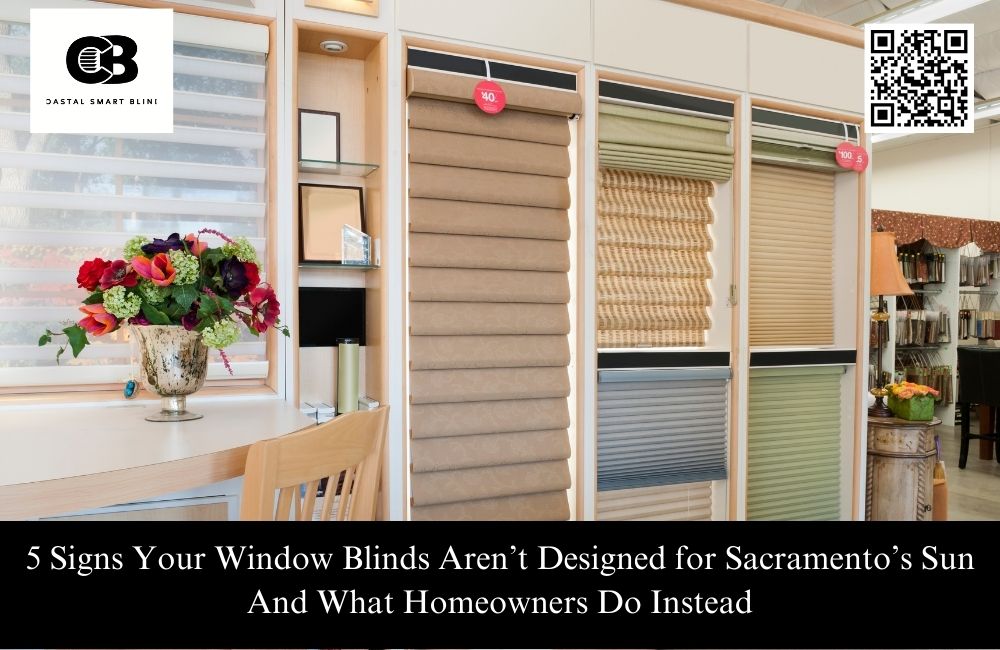
5 Signs Your Window Blinds Aren’t Designed for Sacramento’s Sun And What Homeowners Do Instead
If you live in Sacramento, you already know the sun here isn’t subtle. It’s bright, persistent, and especially intense in the afternoon. While most homeowners expect some heat and glare, many don’t realize that their window blinds may actually be making these problems worse—simply because they weren’t designed for Sacramento’s sun in the first place.
This is a fact-finding, curiosity-driven guide meant to help you spot the warning signs early. If your home feels hotter than it should, if certain rooms are uncomfortable at specific times of day, or if you’re constantly adjusting blinds, these signs may point to a bigger issue than you think.
Below are five common signs your window blinds aren’t designed for Sacramento’s sun and what homeowners usually do instead once they notice them.
Sign #1: Rooms Get Hot Even When the Blinds Are Closed
One of the most overlooked clues is when blinds are closed but the room still heats up quickly. This usually means the blinds are blocking light but not heat. In some cases, the blinds actually trap heat between the glass and the blind, acting like a mini greenhouse.
Many standard blind shades for windows are designed primarily for privacy and light control, not for prolonged solar exposure. In Sacramento’s climate, that difference matters.
What homeowners do instead:
They start looking for blinds that manage solar heat gain, not just brightness. This often leads them toward insulated shade designs, reflective materials, or systems that can adjust throughout the day as sunlight changes.
Sign #2: You’re Constantly Adjusting Blinds Throughout the Day
If you find yourself opening, tilting, and closing blinds multiple times a day, that’s a sign your window treatments aren’t keeping up with the sun’s movement. Sacramento’s sun angle shifts significantly from morning to late afternoon, especially on west-facing windows.
Manual blinds weren’t designed to adapt continuously. Over time, this constant adjustment becomes frustrating and it increases wear on the blinds themselves.
What homeowners do instead:
Many begin exploring window shade automatic solutions that adjust without manual effort. Automation helps blinds respond consistently to sunlight instead of relying on someone being home at the right moment.
Sign #3: Furniture, Floors, or Blinds Are Fading Unevenly
Fading isn’t just cosmetic—it’s a sign that UV rays are passing straight through your window coverings. When UV protection is weak or nonexistent, damage happens slowly and unevenly.
You might notice:
One side of a sofa lighter than the other
Flooring near windows losing color
Blinds themselves discoloring faster than expected
This is a common issue in Sacramento homes because UV exposure is strong and frequent.
What homeowners do instead:
They look for blinds that limit UV penetration while still allowing usable daylight. Similar to how automobile window blinds are designed to handle constant sun without degrading, residential blinds in high-sun homes need UV-aware materials to last.
Sign #4: Certain Rooms Are Always Harder to Cool
When one room is consistently hotter than others—despite the same thermostat setting—the issue often starts at the window. West- and south-facing rooms receive much more sun than others, yet many homes use identical blinds everywhere.
This “one-style-fits-all” approach rarely works in Sacramento.
What homeowners do instead:
They begin considering room-specific solutions, often turning to custom blinds Sacramento options that match blind performance to window direction, room usage, and sun exposure. Customization isn’t about style alone—it’s about correcting uneven comfort.
Sign #5: Blinds Show Wear Faster Than Expected
Blinds that were installed just a few years ago shouldn’t already be warping, stiff, or difficult to operate. When they are, heat stress is often the cause.
Common signs of early failure include:
Slats that don’t align properly
Fabrics that feel brittle
Mechanisms that stick or strain
Blinds that feel warm to the touch in the afternoon
Sacramento’s dry heat accelerates material fatigue, especially in products not designed for it.
What homeowners do instead:
They move toward solutions that reduce daily stress on blinds often including motorized blinds. Automation reduces handling, keeps blinds in optimal positions, and helps materials age more slowly under constant sun exposure.
Why These Problems Often Go Unnoticed
Most of these issues don’t appear overnight. Homeowners adapt gradually:
Avoiding certain rooms in the afternoon
Turning the AC lower
Living with glare at certain times
Assuming discomfort is “just summer”
Because blinds still technically function, their role in discomfort often gets overlooked.
What Sacramento Homeowners Learn Over Time
Homeowners who address these issues often notice:
More consistent indoor temperatures
Less glare during peak sun hours
Fewer daily adjustments
Slower wear on blinds and interiors
A home that simply feels easier to live in
The difference isn’t cosmetic—it’s functional.
Final Thoughts
In a high-sun city like Sacramento, window blinds either work with the sun—or fight a losing battle against it. When blinds aren’t designed for this climate, they quietly contribute to heat buildup, discomfort, fading, and frustration.
Recognizing these five signs early gives homeowners the chance to rethink how their blinds perform, not just how they look. When blinds are chosen with Sacramento’s sun in mind, comfort tends to follow.
NAP (Name – Address – Phone)
Coastal Smart Blinds
4705 Crimson Ct
Sacramento, CA 95842, United States
Phone: +1 (916) 940-3839
