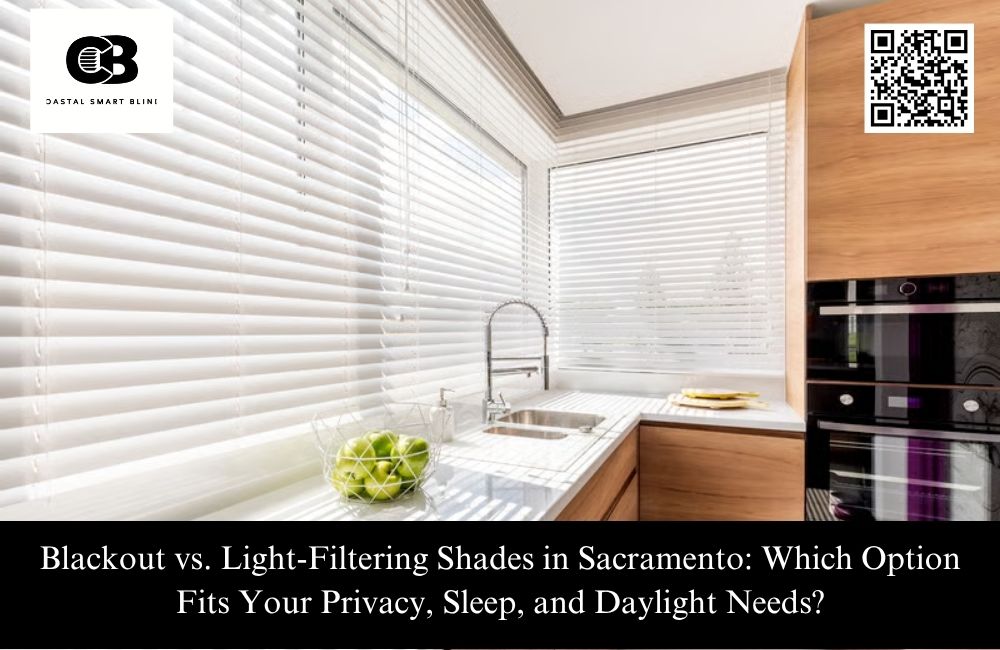
Blackout vs. Light-Filtering Shades in Sacramento: Which Option Fits Your Privacy, Sleep, and Daylight Needs?
Choosing between blackout and light-filtering custom blinds Sacramento homeowners can use comfortably depends on what each room needs most. Bedrooms may require stronger darkness and privacy, while kitchens, living rooms, and home offices often benefit from softer natural light. In Sacramento, where bright mornings and intense afternoon sun are common, the right fabric can make a noticeable difference in comfort, glare control, sleep quality, and how open a room feels.
Blackout and light-filtering shades are not interchangeable. Each serves a different purpose, and many homes benefit from using both in different rooms. Understanding the differences before ordering helps homeowners choose window treatments that match daily routines rather than relying on one fabric throughout the house.
Blackout or Light-Filtering Shades?
Choose blackout shades when you want stronger light reduction, greater nighttime privacy, or a darker sleeping environment.
Choose light-filtering shades when you want to soften sunlight, reduce glare, and maintain natural brightness.
Blackout shades are often better for:
Bedrooms
Nurseries
Media rooms
Guest rooms
Shift-worker sleeping areas
Light-filtering shades are often better for:
Living rooms
Kitchens
Dining rooms
Home offices
Hallways and common areas
The best choice depends on window direction, room function, privacy needs, and whether the homeowner wants daylight or darkness.
What Are Blackout Shades?
Blackout shades use dense or specially backed materials designed to block most incoming light through the fabric.
They are commonly available as:
Roller shades
Cellular shades
Roman shades
Dual shades
Drapery-lined systems
Blackout fabric itself can provide strong light reduction, but total darkness also depends on how the shade is mounted.
Why Mounting Matters
Even high-quality blackout fabric may allow light around the edges when installed inside the window frame.
For stronger room darkening, homeowners may consider:
Outside-mounted shades
Wider fabric coverage
Side channels
Layered drapery
Carefully fitted cassette systems
Professionally measured blind shades for windows can help reduce unnecessary light gaps and create more consistent coverage.
What Are Light-Filtering Shades?
Light-filtering shades soften direct sunlight without fully blocking it.
Instead of creating darkness, they diffuse brightness and help reduce harsh contrast.
These shades are useful when homeowners want:
Natural daylight
Reduced glare
Softer interiors
Moderate daytime privacy
Less direct sun exposure
A more open room
Light-filtering materials are available in roller, cellular, Roman, zebra, and other shade styles.
Which Option Provides Better Privacy?
Privacy depends on both fabric density and lighting conditions.
Blackout Shades for Stronger Privacy
Blackout materials generally provide greater visual privacy because very little light passes through the fabric.
They are especially useful in:
Bedrooms
Bathrooms
Street-facing rooms
Ground-floor spaces
Homes close to neighboring properties
When fully lowered, they can create dependable coverage during both daytime and nighttime hours.
Light-Filtering Shades for Daytime Privacy
Light-filtering fabrics can reduce visibility from outside during daylight while preserving brightness.
However, privacy may change after sunset. When interior lights are on, silhouettes or activity may become more visible depending on the fabric.
Homeowners who need stronger evening privacy may want to pair light-filtering shades with drapery or use a dual-shade system.
Which Shades Are Better for Sleep?
Blackout shades are generally the stronger choice for bedrooms where reducing morning or street light is important.
Early Morning Light
East-facing Sacramento bedrooms can receive bright morning sun. Blackout shades can help limit that exposure, especially for households that prefer a darker sleeping environment.
Streetlights and Outdoor Lighting
Homes near parking areas, sidewalks, or bright exterior fixtures may also benefit from stronger nighttime coverage.
Nurseries and Children’s Rooms
Blackout shades can create a more controlled sleep environment during daytime naps or early summer evenings when daylight lasts longer.
Shift Workers
People who sleep during daytime hours may benefit significantly from stronger room darkening.
Which Shades Are Better for Daylight?
Light-filtering shades are better for rooms where natural brightness is part of the design.
Living Rooms
Living rooms often benefit from filtered light rather than complete darkness. Light-filtering roller, cellular, or zebra shades can soften the room without making it feel closed.
Kitchens
Kitchens usually need usable daylight. A light-filtering shade can reduce harsh sunlight while preserving a bright working environment.
Home Offices
Light-filtering and solar fabrics can reduce glare on screens while maintaining natural light.
Dining Rooms
Soft filtered light can create a comfortable atmosphere without requiring artificial lighting throughout the day.
How Sacramento’s Sunlight Affects the Choice
Window direction matters when deciding between blackout and light-filtering shades.
East-Facing Windows
East-facing rooms receive stronger morning sunlight.
Bedrooms may benefit from blackout shades, while kitchens and breakfast areas may work well with light-filtering materials.
West-Facing Windows
West-facing rooms often receive intense afternoon sun.
Blackout or solar fabrics may help control glare and reduce direct sunlight, especially in bedrooms and media rooms.
South-Facing Windows
South-facing windows may receive prolonged daylight. Light-filtering shades can help preserve brightness while reducing direct exposure.
North-Facing Windows
North-facing windows generally receive softer light. Light-filtering fabrics are often sufficient unless stronger privacy is required.
Can Blackout Shades Help With Summer Heat?
Blackout shades can reduce direct sunlight entering a room, which may help limit solar heat gain.
However, fabric alone does not determine thermal performance.
Factors include:
Window glass
Mounting method
Shade fit
Fabric construction
Window direction
Time of operation
Cellular blackout shades may add an insulating layer near the glass because of their honeycomb structure.
Exterior and solar shades may also be useful for intense sun exposure.
Window treatments should be viewed as one part of a broader comfort strategy that includes insulation, efficient glazing, and HVAC performance.
Can Light-Filtering Shades Still Reduce Glare?
Yes. Light-filtering shades are often chosen specifically because they soften direct sunlight.
They can make a room more comfortable without eliminating daylight.
This is especially useful for:
Computer work
Television viewing
Reading
Dining
Customer-facing spaces
Open-plan living areas
The right opacity should be selected according to the amount and direction of sunlight entering the room.
Blackout vs. Light-Filtering Roller Shades
Roller shades are available in both blackout and light-filtering fabrics.
Blackout Roller Shades
These provide strong light reduction and a simple appearance.
They are commonly used in bedrooms, media rooms, nurseries, and guest rooms.
Light-Filtering Roller Shades
These soften sunlight and maintain brightness.
They work well in living rooms, kitchens, home offices, and dining spaces.
Roller shades can also be motorized, making them convenient for large or frequently adjusted windows.
Blackout vs. Light-Filtering Cellular Shades
Cellular shades offer a soft appearance and insulating honeycomb structure.
Blackout Cellular Shades
These are useful for bedrooms and rooms where both light reduction and added insulation are priorities.
Light-Filtering Cellular Shades
These provide softer natural light and privacy while maintaining a bright atmosphere.
They can be effective in living rooms, home offices, and guest spaces.
Are Zebra Shades Blackout?
Zebra shades are generally designed for adjustable light control rather than complete blackout.
Their alternating sheer and solid bands allow homeowners to shift between greater openness and increased privacy.
They work best in rooms where flexibility matters more than total darkness.
For stronger room darkening, a roller or cellular blackout shade may be more suitable.
Dual Shades Offer the Best of Both
Dual shades combine two separate fabrics in one system.
Typically, one layer is light-filtering and the other is blackout or room-darkening.
This allows homeowners to:
Use filtered daylight during the day
Increase privacy after sunset
Darken the room when needed
Adjust glare without losing all natural light
Dual shades are especially useful in bedrooms, living rooms, and offices with changing light needs.
How Motorization Improves Both Shade Types
Motorized blinds can make blackout and light-filtering shades easier to use throughout the day.
Homeowners may control shades through:
Remotes
Wall switches
Mobile apps
Smart-home platforms
Preset schedules
Morning Automation
Bedroom blackout shades can open automatically at a preferred time.
Afternoon Glare Control
Light-filtering shades can lower before bright west-facing sunlight becomes distracting.
Evening Privacy
Shades can close automatically after sunset.
A window shade automatic system is especially useful when several rooms require different schedules.
When to Use Blackout and Light-Filtering Shades Together
Many Sacramento homes benefit from using both fabrics rather than choosing one for every window.
A room-by-room strategy might include:
Blackout shades in bedrooms
Light-filtering shades in living rooms
Solar shades in offices
Light-filtering roller shades in kitchens
Dual shades in multipurpose spaces
This approach provides better performance while still allowing the home to maintain a coordinated appearance.
Why Professional Measurement Matters
Fabric choice is only part of the result.
Accurate measurement affects:
Light gaps
Privacy
Mounting depth
Alignment
Shade movement
Motor sizing
Finished appearance
A blackout shade that is too narrow may fail to darken the room effectively. A light-filtering shade installed unevenly may create distracting gaps or poor alignment.
Professional installation helps the product perform closer to its intended purpose.
Avoid Confusing Home Shades With Vehicle Products
The phrase automobile window blinds usually refers to temporary sunshades made for cars. These are unrelated to permanent residential window treatments.
Home blackout and light-filtering shades require architectural measurements, secure hardware, suitable fabrics, and operating systems designed for daily household use.
Frequently Asked Questions
Are blackout shades completely dark?
Blackout fabric blocks most light through the material, but some light may enter around the edges. Mounting style and installation quality affect the final result.
Do light-filtering shades provide privacy at night?
They may provide limited privacy after dark. Interior visibility depends on fabric density and indoor lighting.
Which shade is better for bedrooms?
Blackout or room-darkening shades are usually better when sleep and privacy are priorities.
Which shade is better for living rooms?
Light-filtering, solar, zebra, and dual shades are often better because they preserve natural light.
Can blackout and light-filtering shades be motorized?
Yes. Many roller, cellular, Roman, and dual shade systems support motorization.
Choose the Shade That Matches the Room
Blackout and light-filtering shades serve different purposes. Blackout products are best when darkness and stronger privacy are the priorities, while light-filtering materials are better for preserving daylight and reducing glare.
Sacramento homeowners often achieve the best results by using both across different rooms.
Coastal Smart Blinds provides personalized consultations, fabric swatches, custom window treatments, motorized controls, and professional in-house installation. The team can help compare blackout and light-filtering options based on window direction, room use, privacy needs, and interior design.
Schedule a consultation to choose the right shade fabric for each room in your Sacramento home.
Coastal Smart Blinds
Address: 4705 Crimson Ct, Sacramento, CA 95842, United States
Phone: +1 (916) 940-3839
