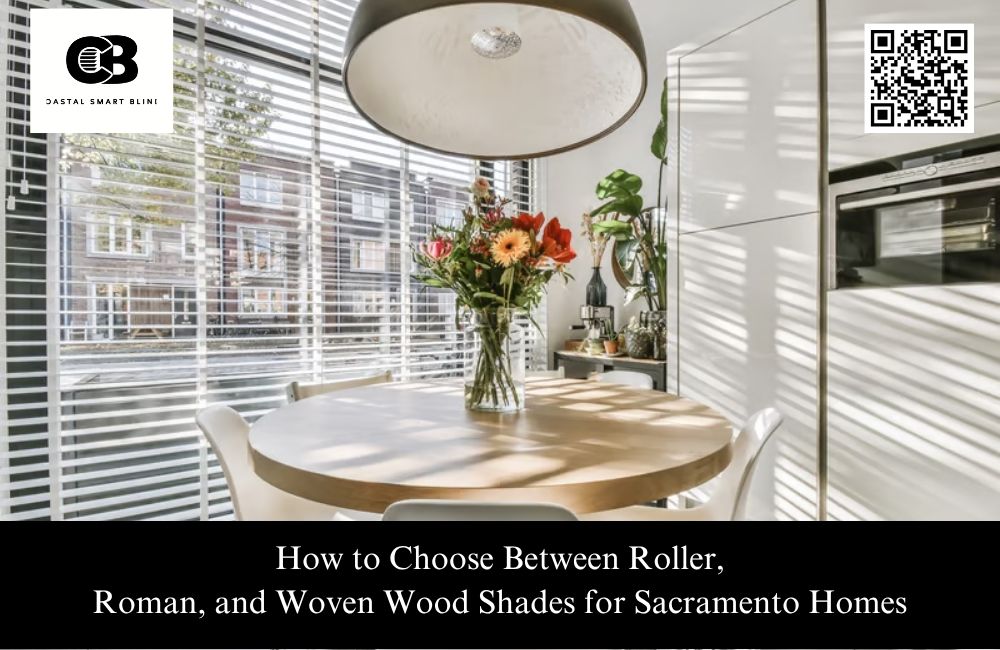
How to Choose Between Roller, Roman, and Woven Wood Shades for Sacramento Homes
How to Choose Between Roller, Roman, and Woven Wood Shades for Sacramento Homes
Choosing the right custom blinds Sacramento homeowners can rely on often comes down to balancing appearance, privacy, light control, maintenance, and everyday convenience. Roller shades, Roman shades, and woven wood shades can all work beautifully in Sacramento homes, but they create very different looks and serve different practical needs. A sleek roller shade may suit a modern home office, while a soft Roman shade can bring warmth to a bedroom and a woven wood shade can add natural texture to a living or dining area.
Sacramento’s bright summers and varied home styles make thoughtful shade selection especially important. Instead of choosing one product for every window, homeowners can get better results by considering how each room is used, how much direct sunlight it receives, and what type of atmosphere they want to create.
What Is the Main Difference Between Roller, Roman, and Woven Wood Shades?
The biggest difference is how each shade is constructed and how it contributes to the room.
Roller shades use a flat piece of fabric that rolls neatly onto a tube. They are streamlined, practical, and well suited to contemporary interiors.
Roman shades are made from fabric that forms soft folds when raised. They bring more visual weight and decorative character to the window.
Woven wood shades use natural-looking woven materials to create texture and warmth. They are especially effective in spaces where the window treatment is intended to become part of the interior design.
All three styles can provide useful light and privacy control, but the right choice depends on what matters most in the room.
Roller Shades: Clean, Practical, and Versatile
Roller shades are one of the most flexible choices for Sacramento homes because they work with a wide range of architectural and interior styles.
When raised, the fabric rolls into a compact position near the top of the window. When lowered, it forms a smooth surface with minimal visual clutter.
When Roller Shades Work Best
Roller shades are particularly effective in rooms where clean lines and simple operation are priorities. Kitchens, home offices, living areas, bedrooms, and large window groups can all be good candidates.
Their understated appearance allows other elements, such as cabinetry, furniture, flooring, and artwork, to remain visually dominant.
They are also available in different fabric densities, so homeowners can choose between light-filtering, solar, privacy, and room-darkening materials depending on the room.
Roller Shades for Sacramento Sunlight
West-facing rooms can experience strong late-afternoon glare. Solar roller blind shades for windows can soften this brightness while maintaining some outdoor visibility.
Bedrooms may use room-darkening roller fabrics, while living rooms often benefit from lighter materials that preserve natural daylight.
Why Roller Shades Work Well With Automation
Roller shades are commonly paired with motorized blinds systems because their straightforward up-and-down movement works well with automated controls.
Homeowners may use a remote, wall switch, mobile application, or compatible smart-home platform to operate them. Several shades can also be grouped in larger living spaces.
Roman Shades: Softer Design With Strong Visual Character
Roman shades offer a more decorative alternative to the minimal appearance of roller shades.
Instead of rolling onto a tube, Roman shades gather into fabric folds as they rise. This gives the window more softness and texture.
Where Roman Shades Work Best
Roman shades are particularly well suited to bedrooms, dining rooms, formal living spaces, guest rooms, and other areas where the window treatment is part of the room’s design.
They can complement traditional, transitional, contemporary, and upscale interiors depending on the fabric and fold style.
A neutral Roman shade can create subtle softness, while a textured or patterned fabric can become a focal point.
Privacy and Light Control
Roman shades can use light-filtering materials when the goal is to preserve daylight or lined fabrics when stronger privacy and room darkening are needed.
This makes them especially flexible in bedrooms and street-facing rooms.
For homes close to neighboring properties or sidewalks, lining can improve evening privacy without requiring a separate window treatment.
Things to Consider Before Choosing Roman Shades
Roman shades use more fabric than roller shades, so they usually have a greater visual presence.
The fabric also stacks when the shade is raised, which may cover part of the upper window. Homeowners who want an almost completely unobstructed glass area when the shade is open may prefer a roller design.
Woven Wood Shades: Natural Texture and Warmth
Woven wood shades are chosen primarily for the texture and character they bring to a room.
They are made from woven natural-looking materials that can add warmth to otherwise smooth or neutral interiors.
Where Woven Wood Shades Fit Best
These shades work particularly well in living rooms, dining rooms, bedrooms, breakfast areas, and spaces inspired by organic, coastal, transitional, or relaxed design.
They can also complement Sacramento homes featuring wood flooring, natural stone, warm cabinetry, or indoor-outdoor design elements.
Daylight Through Woven Materials
Depending on the weave, woven wood shades may allow small amounts of daylight to pass through the material.
This can create an attractive filtered effect, but homeowners who need stronger privacy should consider adding a liner.
A privacy liner can reduce visibility while maintaining the texture of the woven material on the room-facing side.
Pairing Woven Shades With Drapery
Woven wood shades pair especially well with decorative drapery.
The woven shade handles everyday light control, while drapery can provide extra softness, privacy, and visual framing around the window.
This layered approach can work especially well in bedrooms and living rooms.
Which Shade Is Best for Privacy?
Privacy depends on the fabric, weave, liner, and mounting style rather than shade type alone.
Roller shades using privacy or room-darkening fabrics generally provide straightforward coverage.
Roman shades can offer excellent privacy when lined properly.
Woven wood shades may need a privacy liner if the material has an open weave.
Homeowners should also think about nighttime conditions. A fabric that looks private during daylight may reveal more from outside when indoor lights are turned on.
Which Shade Is Best for Sacramento Heat and Glare?
For strong afternoon sunlight, roller shades generally offer the widest range of performance-focused fabrics.
Solar roller shades can reduce glare while maintaining some view. Room-darkening roller shades provide stronger coverage.
Roman and woven wood shades can also reduce direct sunlight, but their performance depends heavily on fabric density and lining.
Homeowners concerned about indoor comfort should consider the complete system, including shade fit, window direction, glass type, and time of day the shade is used.
Window treatments can support comfort, but they do not replace efficient windows, insulation, air sealing, or HVAC maintenance.
Which Shade Is Easiest to Maintain?
Roller shades usually have the simplest surface because the fabric remains flat.
This makes them an attractive option for kitchens, family rooms, and other frequently used spaces.
Roman shades contain folds that may require more careful dusting or fabric-specific cleaning.
Woven wood shades have textured surfaces that may collect dust within the weave, so regular light cleaning can help maintain their appearance.
Maintenance requirements should be reviewed before choosing a product for a busy household.
Which Style Works Best in Bedrooms?
Bedrooms need privacy, light control, and visual comfort.
Roman shades can create a soft, finished look while room-darkening lining improves sleeping conditions.
Roller shades are a strong choice for homeowners who prefer a cleaner design or stronger blackout-style coverage.
Woven wood shades can create a warmer atmosphere but may need a liner for dependable evening privacy.
The best choice depends on whether design, darkness, or ease of maintenance is the priority.
Which Style Works Best in Living Rooms?
Living rooms often need more adaptable daylight control.
Roller shades work well when preserving a clean architectural look is important.
Roman shades provide more decorative presence and can coordinate with furniture and fabrics.
Woven wood shades are particularly effective when the room needs natural texture.
In larger Sacramento living rooms, the shade style should also be considered alongside window size. Oversized windows may favor roller systems because they can often handle broad openings more efficiently.
Which Shade Works Best for Kitchens?
Kitchens usually benefit from simple, practical treatments.
Roller shades are often the strongest choice because of their minimal profile and straightforward operation.
Roman or woven wood shades may work in breakfast areas or windows positioned away from cooking and food preparation zones, where homeowners want greater decorative detail.
The mounting location should always account for faucets, counters, cabinet doors, and other nearby fixtures.
Can Roller, Roman, and Woven Wood Shades Be Motorized?
Many roller and selected Roman shade systems can support motorization, depending on size, fabric weight, and product specifications.
Motorization is especially helpful for tall windows, wide openings, or windows positioned behind furniture.
A window shade automatic setup may allow shades to follow schedules throughout the day. For example, west-facing roller shades can lower before intense afternoon sun, while bedroom shades may close automatically in the evening.
Woven wood motorization options depend more heavily on the specific construction and weight of the product, so compatibility should be confirmed during consultation.
How Custom Measurement Changes the Result
The appearance and performance of any shade depend on accurate measurements.
Professional measurement helps determine whether the window should use an inside or outside mount and how much clearance is available for hardware.
It also helps identify potential issues such as shallow frames, uneven openings, protruding handles, or multiple windows that need to align visually.
This is especially important in Sacramento homes with older window frames, custom architecture, bay windows, or large renovated openings.
How to Coordinate Different Shade Types in One Home
Homeowners do not need to choose between roller, Roman, and woven wood shades for the entire property.
Using different styles in different rooms can create better functionality while still maintaining a cohesive design.
A home might use roller shades in the kitchen and office, Roman shades in the bedrooms, and woven wood shades in the living or dining room.
Consistency can come from similar neutral tones, coordinated hardware, repeated textures, or matching drapery rather than identical shade construction.
A Note About Automobile Window Blinds
The phrase automobile window blinds typically refers to temporary sun-blocking accessories designed for vehicle windows. These products are not intended for permanent residential use.
Architectural shades require precise measurements, appropriate brackets, suitable fabrics, and installation methods designed for homes and buildings.
Homeowners searching for Sacramento window treatments should focus on residential shade systems rather than automotive products.
Common Questions About Roller, Roman, and Woven Wood Shades
Are roller shades more modern than Roman shades?
Roller shades generally have a more minimal appearance, while Roman shades create more texture and softness. Either can work in modern interiors depending on the fabric and surrounding design.
Do woven wood shades provide enough privacy?
That depends on the weave. More open materials may need a privacy liner, particularly for bedrooms or street-facing windows.
Which option is best for room darkening?
Roller and lined Roman shades are usually stronger choices when reducing light is a priority.
Can different shade styles be used in neighboring rooms?
Yes. Coordinated colors, fabrics, and hardware can create visual continuity even when shade styles differ.
Which style works best for large windows?
Roller shades are often practical for larger openings, although final product selection depends on width, fabric, motor capacity, and hardware specifications.
Choose the Shade That Fits the Space, Not Just the Style
Roller, Roman, and woven wood shades each bring something different to Sacramento homes. Roller shades provide clean functionality, Roman shades add softness and design detail, and woven wood shades bring natural texture and warmth.
The strongest choice comes from considering room function, sunlight, privacy, maintenance, window size, and interior design together.
Coastal Smart Blinds provides personalized consultations, fabric swatches, custom window treatments, motorized systems, and professional in-house installation throughout Sacramento and surrounding communities. Homeowners can compare materials and styles in the context of their actual rooms before deciding which option fits best.
Schedule a consultation to create a window treatment plan tailored to the architecture, lighting, and design of your Sacramento home.
Coastal Smart Blinds
Address: 4705 Crimson Ct, Sacramento, CA 95842, United States
Phone: +1 (916) 940-3839
