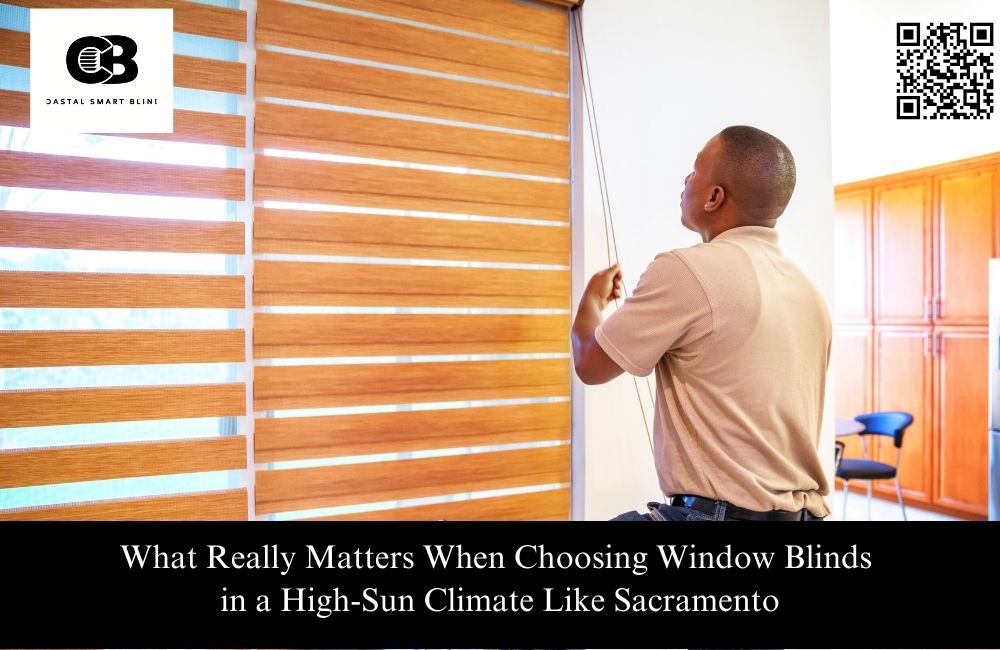
What Really Matters When Choosing Window Blinds in a High-Sun Climate Like Sacramento
If you live in Sacramento, you already know that sunshine isn’t an occasional feature, it’s a constant. Long, bright days and intense afternoon sun shape how homes feel, how rooms heat up, and how materials age over time. Yet when it comes to window blinds, many homeowners still choose based on looks alone, assuming most options perform about the same.
This blog is a fact-finding, curiosity-driven guide designed to answer a simple but often overlooked question: what actually matters when choosing window blinds in a high-sun climate like Sacramento?
No pricing, no promotions, just the practical factors that make the difference between blinds that quietly work for your home and blinds that slowly create discomfort.
If you’ve ever wondered why one room is always hotter, why blinds wear out sooner than expected, or why you’re constantly adjusting them, this guide is meant to help you see window blinds through a different lens.
Why High-Sun Climates Change the Rules
In many parts of the country, window blinds mainly handle privacy and light. In Sacramento, they must also manage:
• Prolonged daily sun exposure
• High UV intensity
• Dry heat that stresses materials
• Rapid sun-angle changes throughout the day
Because these conditions are present most of the year, small blind-selection mistakes tend to show up faster and more clearly here than in milder climates.
What Most Homeowners Think Matters—and What Actually Does
Many homeowners focus on color, style, or whether blinds “look right” with the room. While aesthetics matter, Sacramento homes demand performance-based decisions first.
Here’s what actually matters most.
1. Heat Behavior, Not Just Light Blocking
One of the biggest misconceptions is that darker or thicker blinds automatically reduce heat. In reality, some blinds block light while still allowing solar heat to pass through or worse, they trap it between the blind and the glass.
Effective blind shades for windows in high-sun areas must manage solar heat gain, not just brightness. If a room still feels hot even when blinds are closed, heat control is likely the missing piece.
2. UV Protection and Long-Term Interior Damage
UV rays don’t just affect skin, they slowly damage furniture, flooring, artwork, and fabrics. Fading near windows is often the first visible sign.
Blinds that don’t limit UV penetration allow this damage to happen gradually and unevenly. In Sacramento, UV exposure is frequent enough that this factor becomes critical over time.
3. Material Durability Under Constant Sun
Blinds rarely fail overnight. Instead, they degrade slowly through:
• Warping
• Discoloration
• Cracking
• Stiff or uneven operation
Materials that aren’t designed for prolonged heat exposure simply don’t last as long here. Durability in this climate matters as much as it does for automobile window blinds, which must withstand constant sun without deforming.
4. Sun Direction and Daily Exposure Patterns
Not all windows experience the same conditions. West-facing windows endure intense afternoon heat, while south-facing windows receive steady, all-day exposure.
Using the same blind style throughout an entire home often leads to uneven comfort. This is why many homeowners eventually look into custom blinds Sacramento solutions, to match blind performance to specific rooms, directions, and daily use.
5. How Often Blinds Need to Be Adjusted
Sacramento’s sun doesn’t stay in one place. It shifts significantly from morning to evening, changing glare, heat, and privacy needs throughout the day.
If blinds require constant manual adjustment, comfort becomes a chore. This is often when homeowners begin exploring window shade automatic options not because they want something flashy, but because consistency matters more than convenience.
6. The Role of Automation in High-Sun Homes
In high-sun environments, automation isn’t about luxury, it's about adaptability. Motorized blinds allow window coverings to respond to changing sun angles without relying on someone to constantly intervene.
Automation helps maintain:
• Consistent indoor temperatures
• Reduced glare throughout the day
• Less daily adjustment fatigue
For many Sacramento homeowners, this becomes a practical solution to a climate-driven problem.
How Different Window Blinds Perform in Sacramento Conditions
Understanding blind types helps clarify what works—and why.
Cellular (Honeycomb) Shades
Designed with internal air pockets that slow heat transfer, helping stabilize temperatures in sun-exposed rooms.
Solar Shades
Reduce glare and UV while preserving outward visibility; effectiveness depends on fabric openness and placement.
Roller Shades
Performance varies widely by fabric. Decorative materials may trap heat, while sun-rated fabrics perform better.
Roman Shades
Comfort depends heavily on fabric thickness and lining; some versions retain heat near windows.
Faux Wood Blinds
More heat-resistant than natural wood and allow adjustable light control throughout the day.
Motorized Systems
Often chosen when manual blinds can’t adapt fast enough to daily sun movement.
How to Know If Your Current Blinds Are Falling Short
Ask yourself:
• Do some rooms feel hotter than others at the same time of day?
• Are blinds warm to the touch in the afternoon?
• Is furniture fading near windows?
• Do you adjust blinds several times a day?
• Do rooms feel more comfortable after sunset?
If several of these apply, your blinds may not be suited for Sacramento’s sun intensity.
Why These Details Are So Often Overlooked
Most comfort issues develop gradually. Homeowners adapt by closing doors, adjusting thermostats, or avoiding certain rooms without realizing blinds are part of the problem.
Because blinds usually still “work” in a basic sense, their role in discomfort often goes unchecked.
Final Thoughts
In a high-sun climate like Sacramento, choosing window blinds is less about style and more about how those blinds behave day after day under constant exposure. Heat control, UV resistance, material durability, adjustability, and room-specific needs all matter far more here than many homeowners realize.
When blinds are selected based on how they actually perform in Sacramento’s climate, homes feel cooler, more balanced, and easier to live in without constant adjustments or quiet frustration.
NAP (Name – Address – Phone)
Coastal Smart Blinds
4705 Crimson Ct
Sacramento, CA 95842, United States
Phone: +1 (916) 940-3839
