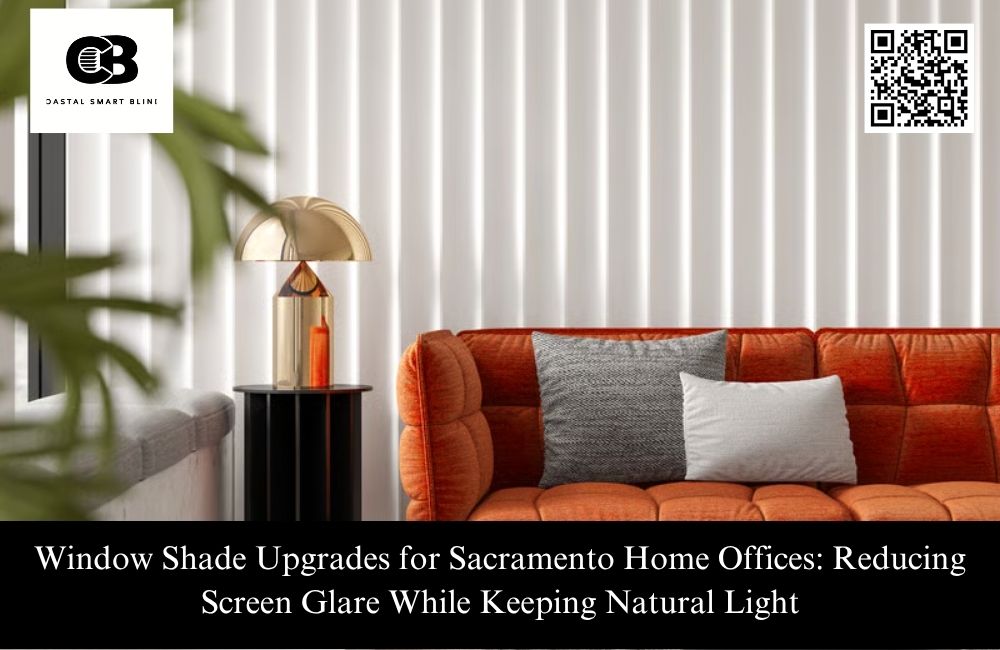
Window Shade Upgrades for Sacramento Home Offices: Reducing Screen Glare While Keeping Natural Light
A productive home office needs enough daylight to feel comfortable without creating constant reflections on monitors, laptops, and video-call screens. For Sacramento homeowners, that balance can be difficult when bright morning or afternoon sun enters directly through the workspace. Professionally fitted custom blinds Sacramento homeowners choose can help reduce glare while preserving the natural light that makes a home office feel open and inviting.
The best solution is not always the darkest shade. In many cases, the goal is to filter sunlight, improve screen visibility, protect privacy, and maintain a comfortable atmosphere throughout the workday. Choosing the right fabric, shade style, mounting method, and operating system can make a significant difference in how well the room functions.
Why Screen Glare Is a Common Home Office Problem
Glare occurs when direct or reflected sunlight creates excessive brightness around a screen. It may appear as visible reflections, washed-out images, or strong contrast between the monitor and the rest of the room.
Sacramento home offices can be especially affected when desks are positioned near large windows or when the room receives strong east- or west-facing sunlight.
Morning glare is common in east-facing offices, while west-facing rooms may become difficult to use later in the afternoon.
The problem is not simply the amount of sunlight. The direction, angle, surface finishes, and monitor position all influence how distracting the glare becomes.
The Goal Is to Filter Light, Not Eliminate It
Completely darkening a home office can solve glare, but it may create another problem: an unnecessarily dim workspace.
Natural daylight can make a room feel larger and more pleasant, which is why many homeowners prefer a solution that softens sunlight instead of blocking it completely.
Well-selected blind shades for windows can reduce the intensity of direct light while keeping the room visually connected to the outdoors.
This is where solar, light-filtering, cellular, and adjustable shade systems can be particularly useful.
Solar Roller Shades for Screen-Focused Workspaces
Solar roller shades are one of the strongest options for home offices because they are designed to reduce glare while maintaining some outside visibility.
The fabric uses a woven structure that filters direct sunlight.
Why Solar Shades Work Well
Solar shades can make screens easier to view without creating a closed-off feeling.
They are especially useful for home offices with large windows, outdoor views, or west-facing exposure.
The fabric openness determines how much light and visibility remain.
A tighter fabric generally provides stronger glare reduction, while a more open fabric preserves more of the view.
Choosing the Right Openness
There is no universal openness level that works for every home office.
The decision should consider the window direction, distance between the desk and glass, privacy needs, and amount of exterior brightness.
A Sacramento office that faces intense western sun may need stronger filtration than a north-facing room with softer daylight.
Light-Filtering Roller Shades for Softer Daylight
Light-filtering roller shades are another practical option when preserving brightness is the priority.
Unlike solar fabric, which often maintains some view, light-filtering material diffuses sunlight more evenly across the room.
This can help reduce sharp contrast around the screen.
Light-filtering roller shades are particularly suitable when the home office also functions as a guest room, study, or multipurpose living space.
Their clean design also works well with contemporary desks, built-in shelving, and minimalist interiors.
Cellular Shades for Comfort and Diffused Light
Cellular shades use a honeycomb-shaped construction that creates a softer visual effect while adding an insulating layer near the glass.
They can be a good fit for home offices where both glare and temperature changes are concerns.
Helping With Afternoon Comfort
A desk positioned near a west-facing window may feel warmer as the afternoon progresses.
Cellular shades can help reduce direct solar exposure while adding another layer between the room and the glass.
They should not be considered a replacement for efficient windows or insulation, but they can support better comfort.
Softening Bright Light
Light-filtering cellular materials diffuse incoming sunlight rather than allowing a concentrated beam to reach the desk.
This can create more even lighting across the workspace.
Zebra Shades for Adjustable Workday Lighting
Zebra shades combine alternating sheer and solid fabric bands.
By adjusting the alignment, homeowners can change the amount of light entering the room without fully raising or lowering the shade.
This makes them useful for home offices where sunlight conditions change significantly throughout the day.
During softer morning light, the shade can remain more open. During stronger afternoon sun, the solid bands can provide additional coverage.
Their contemporary appearance also suits modern home offices.
Why Desk Placement Still Matters
A window shade can improve glare control, but office layout also plays an important role.
Placing the monitor directly in front of a bright window may create strong contrast between the screen and background.
Positioning the screen with the window directly behind the user can lead to reflections across the monitor.
When possible, positioning the desk perpendicular to the window can help reduce both problems.
The window treatment then becomes a way to fine-tune the lighting instead of compensating for a difficult layout.
West-Facing Sacramento Home Offices Need Stronger Planning
West-facing rooms often receive Sacramento’s strongest late-day sunlight.
This can create a combination of glare and heat during the final hours of the workday.
Solar shades, cellular shades, dual shades, and motorized systems are all worth considering for these spaces.
A tighter solar fabric may provide useful screen protection while preserving an outdoor view.
If stronger evening privacy is needed, a dual system or additional drapery may be more appropriate.
East-Facing Offices Need Morning Glare Control
East-facing home offices have a different challenge.
Bright sunlight may enter during the first part of the working day, particularly when the desk is positioned close to the window.
Light-filtering or solar shades can soften this morning exposure without leaving the office dark for the remainder of the day.
Homeowners who begin work early may benefit from programmable controls that lower the shades before the strongest morning sunlight reaches the desk.
Motorized Shades Make Frequent Adjustments Easier
A home office window may need several adjustments throughout a normal workday.
This is where motorized blinds can add practical value.
Instead of leaving the shade in one position all day, homeowners can adjust it as sunlight changes.
Motorized shades may be operated with a remote, wall switch, mobile application, or compatible smart-home platform.
This is especially useful for windows behind desks, shelving, large monitors, or other furniture.
Automatic Scheduling Can Follow the Workday
A window shade automatic routine can make glare control more consistent.
For example, a west-facing office can remain open during the morning and automatically lower before afternoon sun begins reaching the screen.
The shades can then reopen later or close fully after sunset for privacy.
Automatic schedules can be useful for people who work from home on a regular timetable and do not want to interrupt meetings or focused work to adjust window coverings manually.
Privacy Matters During Video Calls
Home offices often need privacy as well as glare control.
A street-facing or ground-floor office may be visible from neighboring homes, sidewalks, or driveways.
Solar shades can provide useful daytime privacy in some conditions, but they may not provide dependable nighttime privacy when interior lights are on.
Light-filtering fabrics also vary in how much visibility they allow after dark.
If privacy is important during evening work, homeowners may want to consider dual shades, room-darkening materials, or layered drapery.
Dual Shades Offer Day and Evening Flexibility
Dual shades combine two separate materials, usually one light-filtering or solar layer and one room-darkening layer.
During the workday, the lighter material can reduce glare while maintaining daylight.
After sunset, the second layer can provide stronger privacy.
This makes dual shades particularly useful in home offices that are also used for evening meetings, gaming, studying, or guest accommodations.
Custom Measurement Improves Glare Control
Small gaps around the sides of a shade can allow concentrated beams of sunlight to reach the workspace.
For this reason, accurate measurement matters when glare reduction is a priority.
Professional measurement helps determine the correct width, mounting depth, hardware clearance, and fabric coverage.
An outside mount may provide broader coverage when stronger light control is needed, while an inside mount creates a more recessed appearance when the frame has enough depth.
Consider Monitor Location Before Final Installation
The window treatment should be planned together with the room layout.
Before ordering shades, homeowners should consider where the desk, monitor, shelving, and lighting will be located.
A large monitor may block access to a manual shade control.
Built-in cabinets may interfere with outside-mounted hardware.
A desk positioned close to the glass may also change how much side glare is noticeable.
Planning these details before installation helps prevent unnecessary compromises.
Fabric Color Can Affect the Home Office Experience
Color influences both design and how the shade appears against bright sunlight.
Darker solar fabrics often provide clearer exterior views and strong glare control.
Lighter materials may create a brighter, softer appearance within the room.
The best choice depends on wall color, furniture, flooring, monitor placement, and the exterior view.
Reviewing actual fabric swatches inside the office is more useful than judging them only from a catalog or screen.
Layering Shades With Drapery
Some home offices benefit from layered window treatments.
A solar roller shade can handle daytime glare, while drapery provides stronger evening privacy and adds softness to the room.
This approach works particularly well when the office is visible from another living area or when the homeowner wants the workspace to feel more residential and less purely functional.
Layered treatments can also help a home office coordinate with the rest of the property.
Smart Shades Can Support a Cleaner Workspace
Motorized and cordless systems reduce hanging chains and cords around desks, shelves, and electronics.
This creates a cleaner visual appearance and can make the window area easier to use.
For compact Sacramento home offices, reducing unnecessary hardware can help the room feel less crowded.
Clean controls can also be coordinated with lighting switches and other smart-home features.
Do Not Confuse Residential Shades With Vehicle Products
The phrase automobile window blinds generally refers to temporary sunshades or coverings intended for vehicle windows.
These products are unrelated to permanent home-office window treatments.
Residential shades require architectural measurements, secure mounting hardware, appropriate fabrics, and operating systems designed for regular household use.
Homeowners researching screen-glare solutions should focus on products made specifically for residential windows.
Common Questions About Home Office Shades
What window shades are best for computer glare?
Solar roller shades, light-filtering roller shades, cellular shades, and zebra shades are all useful options. The best choice depends on window direction and how much outdoor visibility the homeowner wants to preserve.
Are blackout shades good for home offices?
They can eliminate most incoming light, but they may make the office darker than necessary. Blackout shades are usually better when the room also serves as a media room or requires stronger privacy.
Can solar shades still provide natural light?
Yes. Solar shades are designed to reduce glare while preserving varying levels of daylight and exterior visibility.
Are motorized shades worth it for a home office?
They can be especially useful when sunlight changes throughout the day or when the window is difficult to reach from the desk.
Can smart shades follow a work schedule?
Many compatible systems support programmed operation, allowing the shade to adjust at selected times.
Build a Home Office Around Balanced Natural Light
The best home-office window treatment does not simply block sunlight. It manages it. Sacramento homeowners can reduce screen glare while preserving daylight by choosing fabrics and shade styles that match the window direction, desk placement, privacy needs, and working schedule.
Coastal Smart Blinds provides personalized consultations, fabric swatches, custom shades, motorized systems, and professional in-house installation throughout Sacramento and surrounding communities.
Schedule a consultation to create a home-office window treatment plan that supports better screen visibility, comfortable natural light, and a cleaner everyday workspace.
Coastal Smart Blinds
Address: 4705 Crimson Ct, Sacramento, CA 95842, United States
Phone: +1 (916) 940-3839
